








Your Career Type

Own your career.

Jobs last a few years. The structure of your career shapes your life for decades.

Sixteen career types. One minute to find yours, and what it means for your happiness, momentum and opportunity.

1 minute. Free. No spam.

What knowing your career type gives you

You'll use it when a job offer comes, when you want out, when your CV looks random to others, and when you plan the next few years.

The scan shows which type your career has followed so far. Your type's page then tells you what that kind of career gives you, what it costs, and how to make it work.

  • Happiness

    You'll see what your kind of career gives you and what it costs, so you can tell whether it still suits you, and which part to change if it doesn't.

  • Momentum

    You'll see where your kind of career gains or loses the most, and how to make those moves so you keep what you've built.

  • Opportunity

    You'll see what your kind of career is good at, so you know which chances to look for, and which offers to say yes to.

Which type fits you best, and the skills to get there, come next with the trait test.

What your result tells you

An example from one of the sixteen types.

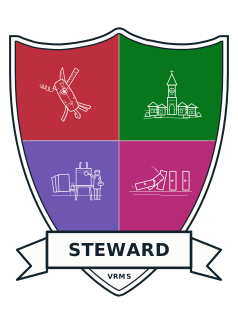
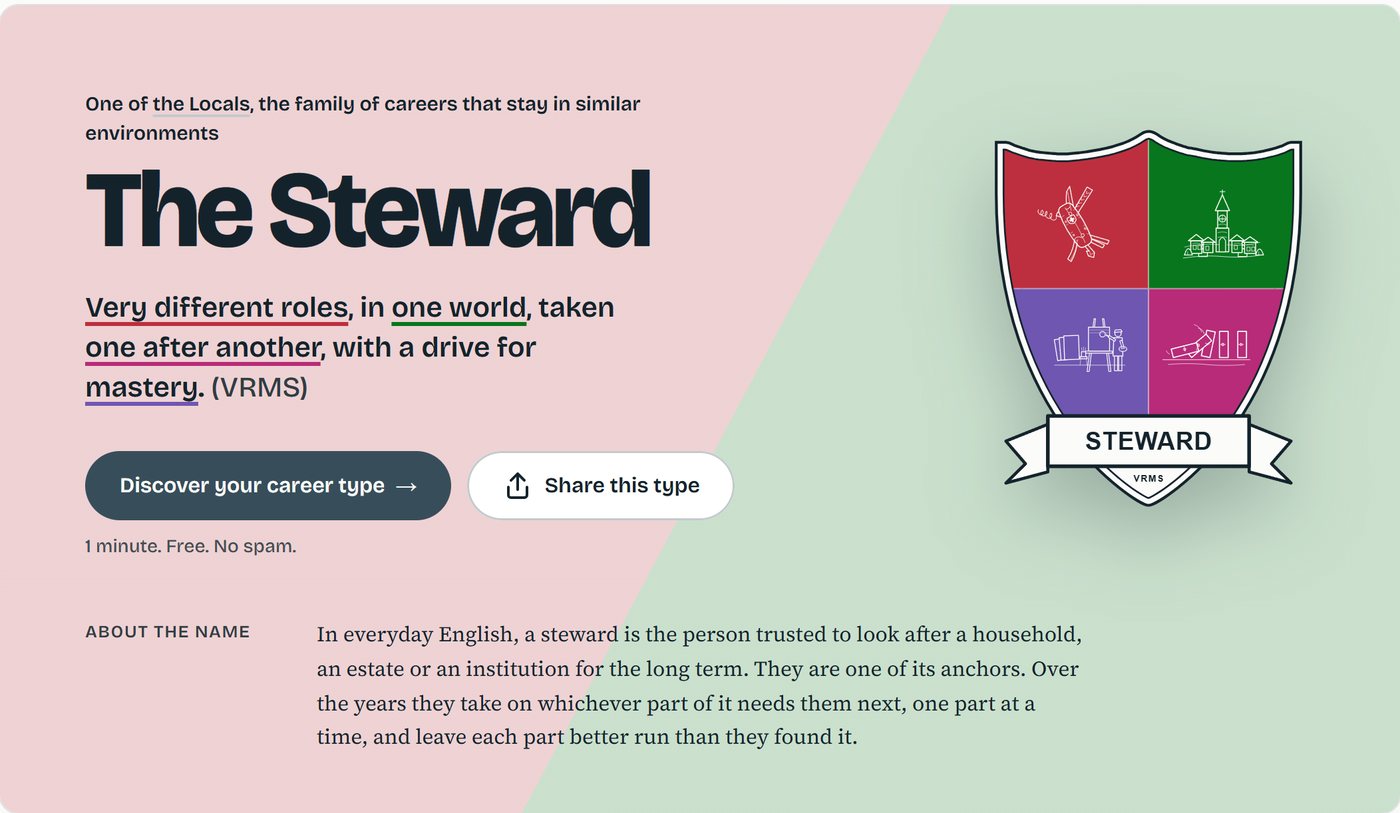
The top of the Steward's page: its name, the line that sums it up, and its shield
The Steward
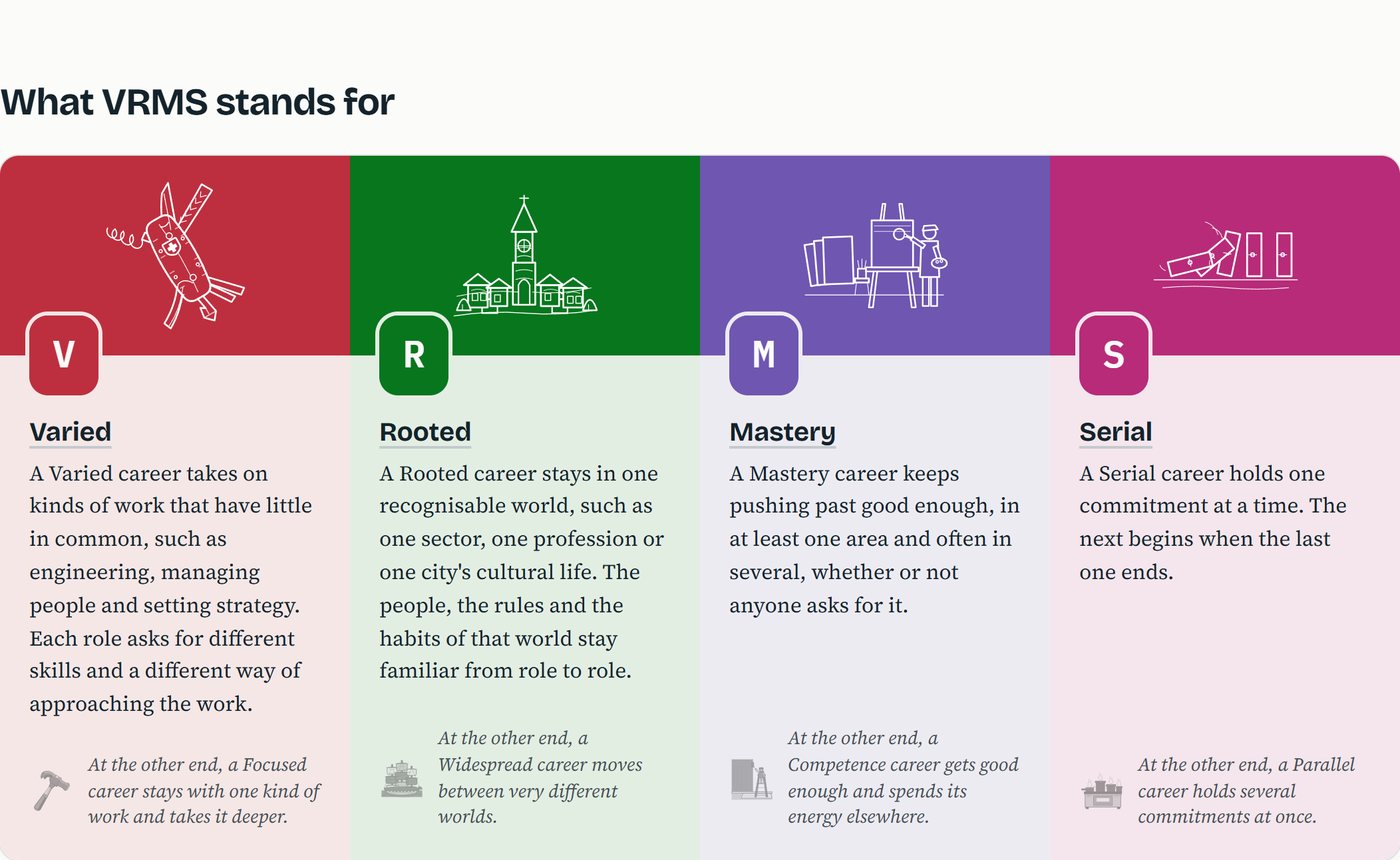
The four letters of VRMS, Varied, Rooted, Mastery and Serial, each on its own colour panel with its drawing
What VRMS stands for
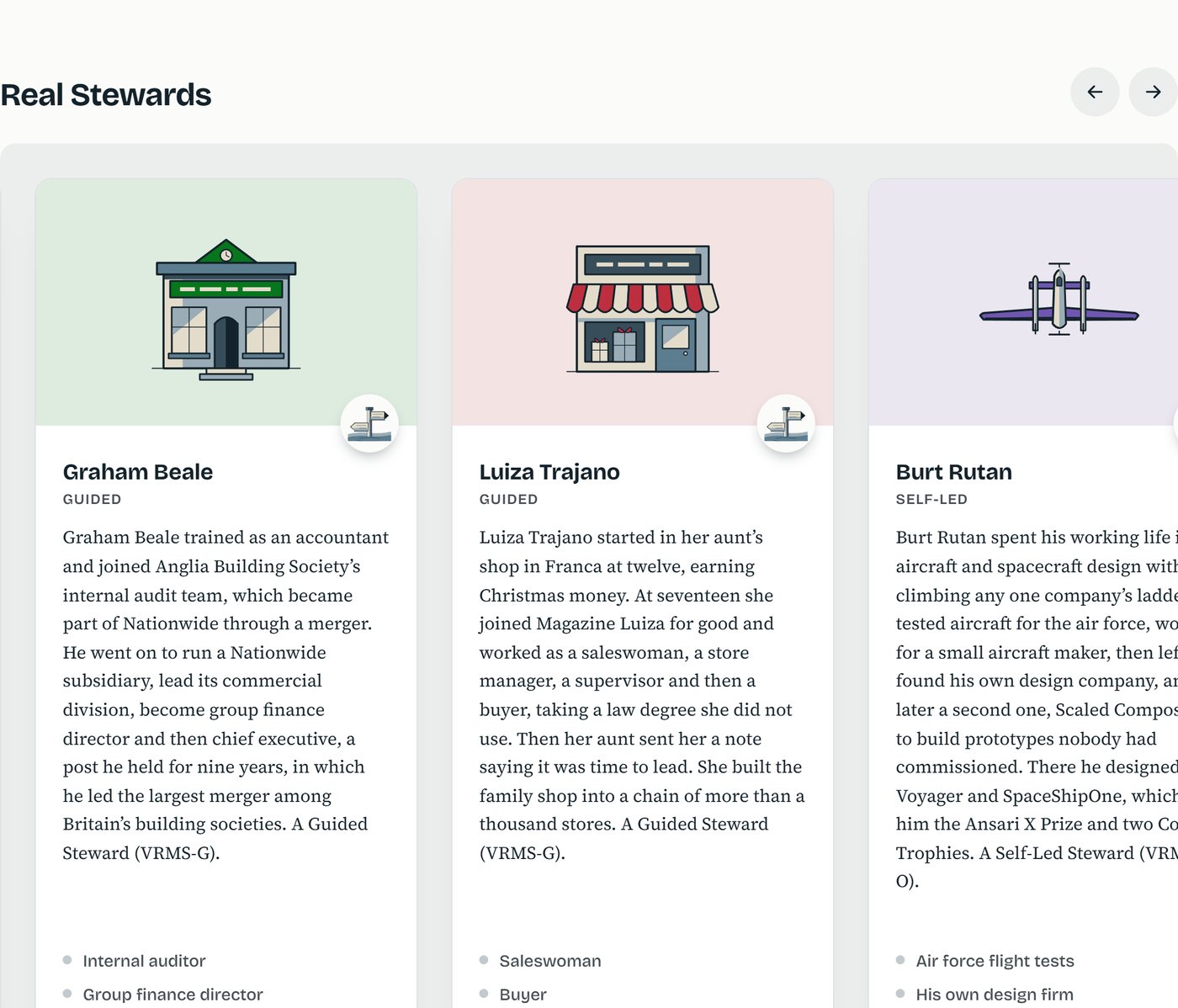
Cards of real Stewards: Graham Beale, Luiza Trajano and Burt Rutan, each with the moves of their career
Real Stewards
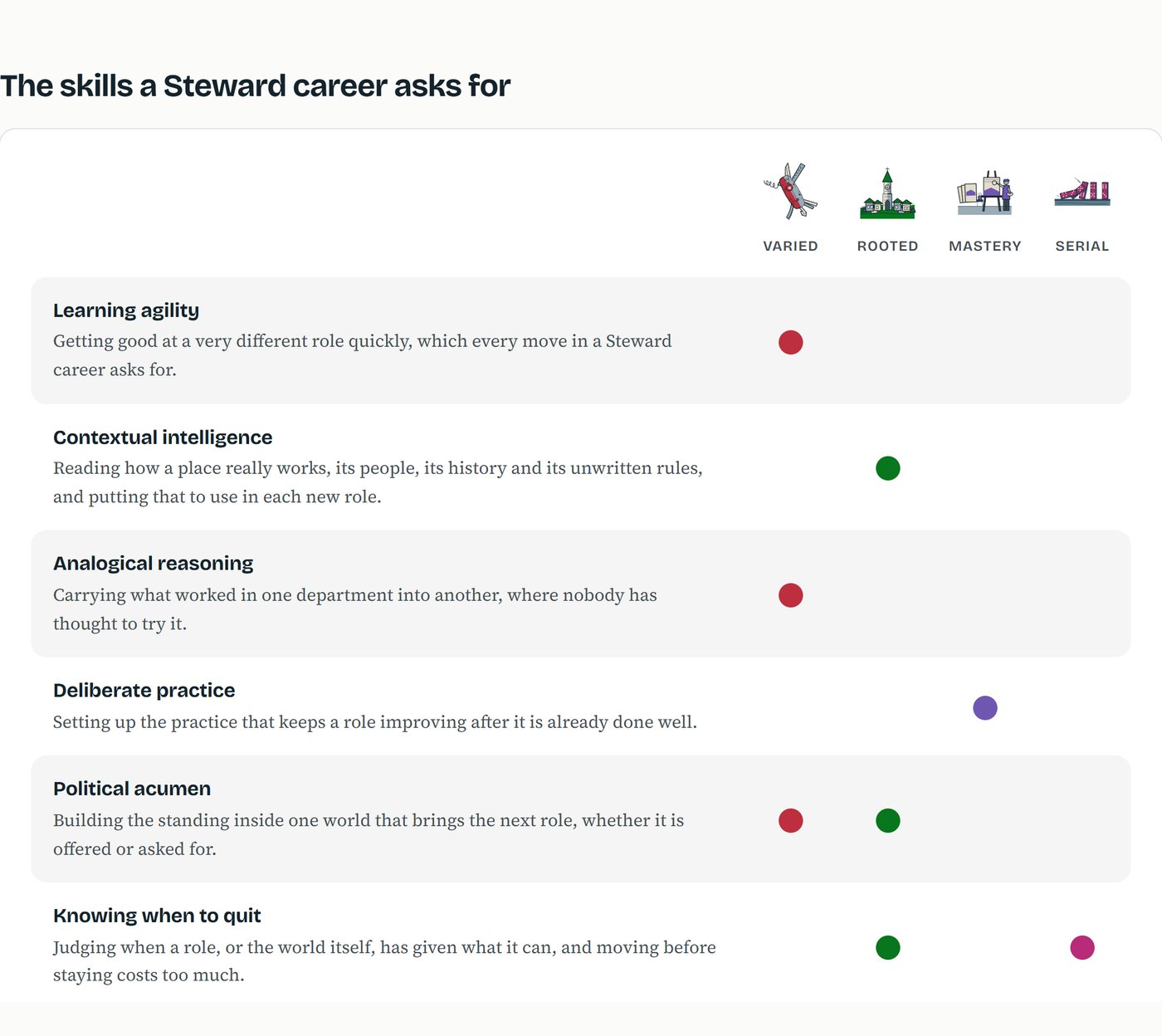
The skills table: six skills, each marked against the letters it serves
The skills a Steward career asks for

Every type has a page like this.

Why nobody taught you this

Most career advice is about your next job. For the career as a whole, you get slogans.

Advice doesn't really help.

  • Be adaptable.
  • Keep learning.
  • Build your personal brand.
  • Follow your passion.
  • Step out of your comfort zone.

Sure. But how? How do you adapt without losing what you've built? Which learning pays off in your kind of career? Advice stops where the work starts.

Advice points you in a direction. A guide shows you the way.

Each type page is a start on that guide: what your kind of career gives, what it costs, and how to make it work.

There are sixteen ways to build a career

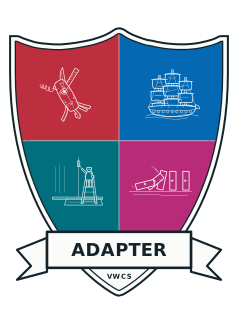
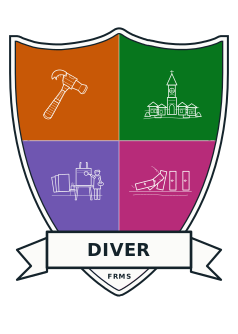
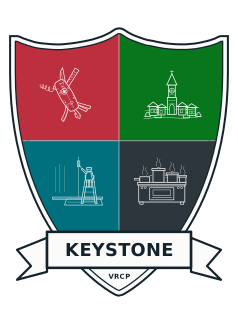
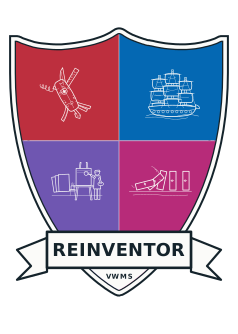
Your career type comes from how many kinds of work you do, in how many kinds of places, how deep you go, and whether you do one thing at a time or several. That makes sixteen types, in four families.

VR

The Locals

different kinds of work, in similar places.

FW

The Voyagers

one kind of work, in different places.

VW

The Generalists

different kinds of work, in different places.

One employer for twenty years? That's a type too.

Specialists and generalists need each other, the way a wall needs both rocks and cement.

No type of career is better than another. But some are definitely better for you, because they fit how you like to work. So which type is yours?

Three steps, and the first is ready

  1. 1

    See your options.

    The sixteen types are your options. The scan shows which one your career has followed so far. It takes a minute.

  2. 2

    Find the type that fits you.

    A trait test, about things like how much variety you need, shows which type suits you. It's coming next: sign up and you'll get it first.

  3. 3

    Learn the skills your type needs.

    Every type has its own risks, and the skills that handle them can be learned, like the basics of tennis. That comes later.

Rik Visser

How this started

I'm Rik Visser. I've made a feature film, traded options, built a software company and run a co-working space. On paper that looks random.

For the last five years I've been invited to talk about exactly this to master students at the University of Amsterdam, in economics, business, finance and entrepreneurship: what it takes to be useful as a generalist, which every entrepreneur and manager has to be to some extent.

What I found is that almost none of them were thinking about their career as a whole. At best they were thinking about their next job. When I talked to people my own age, and older, it was the same: one job at a time, a sequence of one-offs, with no bigger frame around them.

There are two ways to look at a generalist

as someone who lacks a specialism

as someone whose specialism is bringing different points of view together

So this started as a manifesto for generalists, who are usually misread and rarely get their due. One working title was the Generalist Toolkit. But it turns out careers come in many shapes, and we need all of them. That's what became the sixteen career types: five years of those conversations, written down so you can use them.

I have a day job, so I'm building this in steps.

Coming soon

Your best fit

Which of the sixteen types fits you?

The scan shows the career you've had. The trait test, which I'm building now, shows which of the sixteen types fits who you are, and how far your career is from that type.

Or take the one-minute scan